Making the book
How to Make a Memory Book: Three Ways, Compared
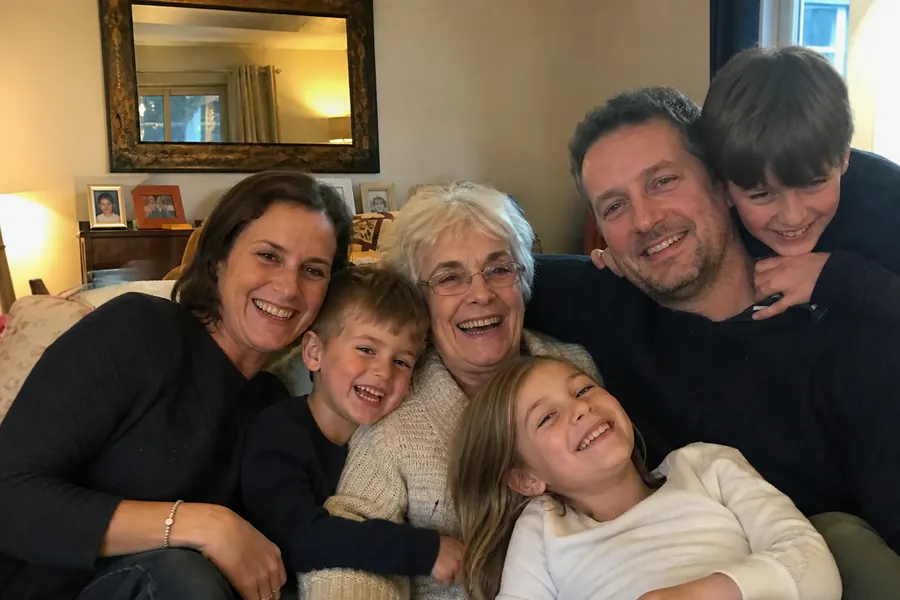
A memory book is any book made to keep what happened: a life, a career, a year, a friendship, a childhood. People make them for big birthdays, retirements, leaving days, new babies, anniversaries, and for someone who has died. There are three main ways to make one, and the right one depends less on your craft skills than on a simpler question: who has the memories?
Start with two questions
- Who has the photos and stories? If it's mostly you, you can make it alone. If they're spread across a family, a team or a group of friends, the hard part is collecting, and you want a method that makes that easy.
- When is it needed? A handmade scrapbook can take months. A printed book needs time for printing and delivery. If the date is fixed, work back from it.
Option 1: A handmade scrapbook
A blank album, printed photos, photo corners or glue, good pens, and whatever else belongs in it: tickets, labels, pressed flowers, a child's drawing. You arrange each page by hand and write in your own handwriting.
Good for: a book that is as much about the making as the result. Handwriting and real objects give it something nothing printed has. It's also a lovely project to do slowly with children or an older relative.
Harder:
- It's slow. A full album is many evenings.
- You need every photo printed first.
- Anyone who lives elsewhere has to post their part to you, or you write their words for them.
- Mistakes are permanent, and there's only ever one copy.
- Ordinary glue and paper can yellow over the years. Acid-free albums and adhesives are worth the extra.
Option 2: A photo book you design yourself
Many online services and apps let you upload photos, choose layouts page by page, add text and order a printed book. You're the editor and the designer.
Good for: someone who has all the photos and enjoys arranging them. You get a lot of control over layout, and you can usually order more than one copy.
Harder:
- You do all the collecting, all the choosing and all the typing.
- Layout freedom takes time. Plenty of these books are started and never finished.
- Words from other people have to be gathered by message and typed in by you, which is where most group efforts stall.
Option 3: A book the group makes together
One person starts the book and shares a link. Everyone adds their own photos and words, and the organiser checks the pages and orders. This is how Paper Chain works. Contributors open the link on their phone, type their name, choose photos and write a line about each; there's no app and no account. A message without a photo is printed on a page of its own. Each photo gets its own page, with the caption underneath in large type.
Good for: memories spread across many people, especially people who live far apart. Each page is in the contributor's own words, and the organiser's job is checking, not making.
Harder, honestly:
- The layout is fixed: one photo to a page, plus note pages. No collages, stickers or mixed layouts.
- No handwriting or real objects, though you can photograph a ticket, a letter or a drawing and add it as a photo.
- You depend on other people replying. Reminder emails help, but someone will still need a phone call.
- You don't control what people write, though you can leave any photo out and fix captions before you order.
Side by side
| Handmade scrapbook | Designed photo book | Group-made book | |
|---|---|---|---|
| Who does the work | You | You | Everyone, a little each |
| Organiser's time | Many evenings | Several hours | Set-up and a final check |
| Words from others | Posted to you or written for them | Collected and typed by you | Each person writes their own |
| Handwriting and keepsakes | Yes | No, unless photographed | No, unless photographed |
| Layout control | Total | High | Fixed: one photo per page |
| Best for | A slow, personal project | One person's photos, carefully arranged | Many people's memories, by a date |
Steps that work for any memory book
- Decide whose story, and what span. One year, one career, one friendship, a whole life. A clear span makes every later choice easier.
- Set a date. A book with a date gets finished.
- Gather photos. Use originals, not copies from chat apps. Photograph old prints flat in daylight; see how to scan old photos with your phone.
- Choose. One photo per moment, faces over scenery, the ordinary alongside the big days. Our guide to choosing photos has a five-minute method.
- Add words. At the least: who, where, when. Better: one detail only the writer would know. If people are stuck, send them prompts for what to write in a memory book.
- Put it in order. Chronological is easiest to read. By person or by theme also works.
- Check names and dates. Then check them again. A misspelled grandchild is the thing everyone notices.
Which should you choose?
- Make it by hand if the memories are mostly yours, you have time, and the making is part of the gift.
- Design a photo book if you have the photos already and enjoy arranging pages.
- Make it as a group if the memories belong to many people and you need it by a date. You can start one here; it's free to start and you only pay when you order.
- Mix them. A group book with a few handwritten cards tucked inside the cover is a good compromise.
Stuck on what to put in it? We've collected memory book ideas for themes and pages.